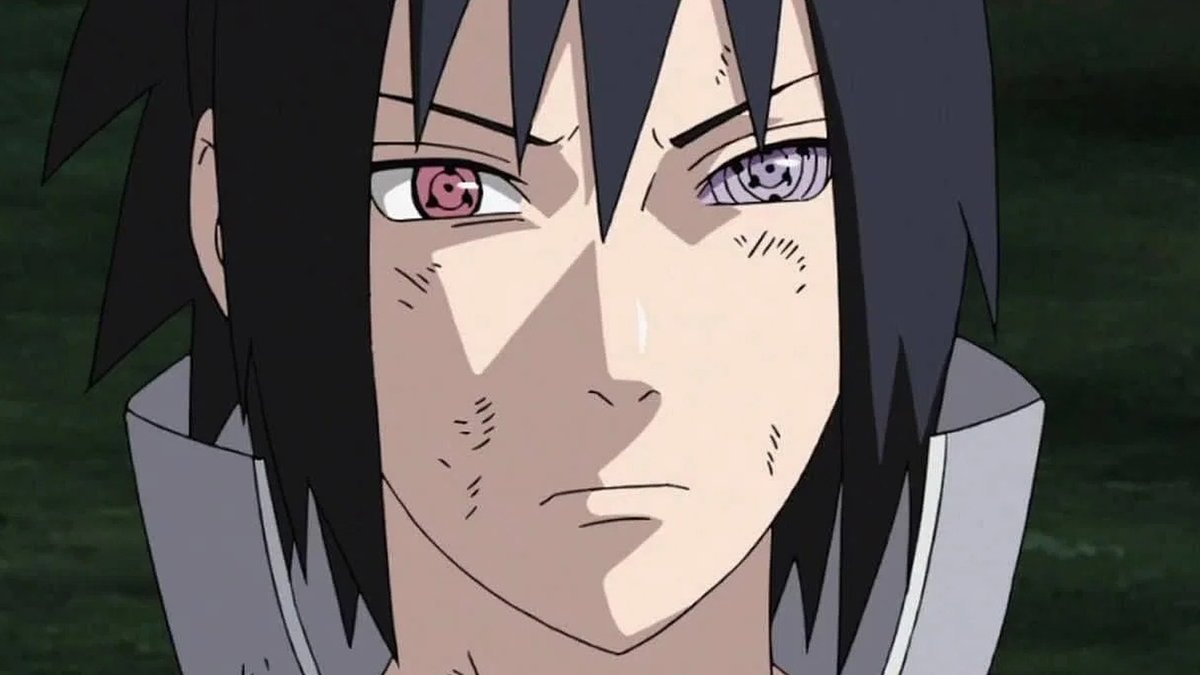
Imagine the chilling, strategic world of The Promised Neverland, where brilliant children navigate a terrifying truth, now infused with the raw power and complex history of one of anime's most iconic anti-heroes: Sasuke Uchiha. This isn't just a fantasy; it's a thought experiment that has captivated fans, sparking endless "what if" scenarios. On the surface, the stoic ninja from Konoha and the resourceful orphans of Grace Field seem worlds apart, but delve deeper, and you'll find surprising thematic overlaps that make this crossover an irresistible puzzle.
Here on our flagship Super Pillar hub, we're dissecting every facet of how Sasuke Uchiha could not only exist but profoundly impact the narrative of The Promised Neverland. From his potential origins within the demon-infested world to the seismic shifts his presence would cause in the children's desperate fight for freedom, we're exploring it all.
A Crossover Unimagined: Why Sasuke Uchiha in The Promised Neverland?
The Promised Neverland captivates with its blend of psychological thriller, survival horror, and shonen-esque hope, centered around the grim reality of human farms supplying food for demons. It's a world where intelligence, strategy, and fierce determination are the ultimate weapons against a meticulously constructed deception. Into this harrowing landscape, we introduce Sasuke Uchiha—a character defined by his exceptional talent, sharp intellect, and a relentless pursuit of power and vengeance.
The appeal of this crossover lies in the dramatic potential. How would Sasuke's unique skill set, his moral ambiguity, and his history of profound loss resonate within a story where children are the prey? Would he be a harbinger of doom, a powerful savior, or a catalyst for an entirely new kind of rebellion? This thought exercise pushes the boundaries of both universes, inviting us to consider new dimensions of survival and retribution.
The Foundation: Understanding The Promised Neverland's World
Before we unleash the Uchiha heir, let's briefly ground ourselves in the intricate tapestry of The Promised Neverland. The story unfolds in a world divided between humans and demons, a separation enforced by "The Promise" a millennium ago. While humans live in peace, demon society relies on special human breeding farms, disguised as idyllic orphanages like Grace Field House, to cultivate highly intelligent children as gourmet food. The children, marked with identifying numbers, live blissful lives under the care of a "Mom" like Isabella, unaware of their grim destiny until they discover the truth, often through the "adoption" of a peer. Emma, Norman, and Ray's discovery of Conny's fate ignites their desperate bid for freedom, plunging them into a dangerous world beyond the farm walls, populated by predatory demons and enigmatic allies. The series explores themes of freedom, family, and the brutal cost of survival.
Imagining Sasuke's Entry into Grace Field
Perhaps the most direct way to integrate Sasuke is as one of the gifted orphans at Grace Field House. How would his inherent prodigy, already evident in his early Naruto years, manifest in a system designed to maximize intellectual output? His quiet intensity and strategic mind would undoubtedly make him a top-tier student, perhaps even challenging Norman's analytical prowess or Ray's tactical genius. Such a powerful personality arriving in the Grace Field ecosystem would fundamentally alter the group dynamics and their escape planning. We explore how Sasuke might thrive as a farm child, perhaps even surpassing the genius trio in our dedicated pillar, examining his potential interactions with Emma's optimism, Norman's intellect, and Ray's cynicism.
Deciphering Sasuke's Unique Abilities in a Demon World
Sasuke's defining traits are his Sharingan and his mastery of ninjutsu—powers that seem alien to The Promised Neverland's more grounded (albeit fantastical) biology. Yet, the TPN world already boasts sentient demons, unique plant life, and a history of ancient agreements. How could the Sharingan, with its enhanced perception and ability to copy movements, be reinterpreted? Could it be a rare genetic mutation, a manifestation of a dormant human power awakened by extreme stress, or perhaps even a demon-given ability? Similarly, his lightning-fast Chidori or the inextinguishable Amaterasu would need a new explanation. We've dedicated a pillar to a deep dive into how his iconic powers could be logically explained within this new reality, considering both biological and supernatural interpretations.
The Shifting Sands of Allegiance: Where Does Sasuke Stand?
Sasuke Uchiha is not a straightforward hero. Driven by personal vengeance and a dark past, his allegiances have always been fluid, prioritizing his objectives above all else. In the high-stakes environment of The Promised Neverland, would he automatically align with Emma's goal of saving all the children? Or would his pragmatic, often ruthless, approach lead him down a different path? His experiences with loss and betrayal could make him either a fiercely loyal protector or a dangerous lone wolf, whose methods clash with Emma's idealism. Understanding his moral compass in a world where children are literally cattle is crucial. You can delve into an exploration of Sasuke's complex motivations and potential alliances to see how his personal demons might influence his decisions concerning Grace Field's true nature.
Beyond the Obvious: Alternate Realities and Theories
What if Sasuke isn't merely a gifted orphan or a human from this world? The imaginative possibilities are vast. Could he be a unique type of demon, perhaps one whose unique biological makeup grants him abilities reminiscent of chakra? Or could he be a traveler from another dimension, a consequence of "The Promise" or some other ancient magical anomaly that accidentally brought him to this specific, harrowing timeline? These theories open up even more intriguing avenues, allowing for a broader integration of his powers and backstory. Our pillar dedicated to unconventional theories that challenge traditional integration, from dimensional travel to a unique demon lineage explores these fantastical yet compelling concepts.
The Butterfly Effect: Sasuke's Influence on TPN's Epic Saga
Introducing a character of Sasuke's caliber would undoubtedly send ripples through the entire narrative of The Promised Neverland. The meticulous plans for escape, the dangerous journey through the demon world, the search for Minerva, and the eventual confrontation with Peter Ratri and the Demon Queen Legravalima—all of it would be altered. Would his power lead to fewer sacrifices? Would his ruthlessness accelerate their goals, or would it create new, unforeseen conflicts? His presence could dramatically change the pacing, the nature of the conflicts, and even the ultimate resolution, including the re-forging of "The Promise" and Emma's final sacrifice. For a detailed analysis of these narrative implications, check out a detailed analysis of how Sasuke's presence would rewrite key moments and the ultimate outcome of the story.
The Enduring Allure of Crossover Imagination
The idea of "Sasuke Uchiha in The Promised Neverland" might seem absurd at first glance, but it speaks to the incredible power of storytelling and fan imagination. It's a testament to the compelling nature of both series that such a crossover can spark so much discussion, allowing us to re-examine beloved characters and narratives through an entirely new lens. As we continue to explore the endless "what ifs" of our favorite fictional worlds, the possibilities for unique storytelling remain limitless, driven by the passionate curiosity of fans like you.